
Lip & Tongue Tie Treatment Southlake
Freedom for Your Child’s Oral Structures
 Lip and tongue ties are not uncommon in babies. When
these conditions are left untreated, however, they can cause major problems. For example, eating may be very
difficult for the baby, and feeding can turn into a stressful, frustrating experience for the parents. To
correct a lip or tongue tie, your child may need a minimally invasive procedure known as a frenectomy. Dr.
Thomas is a true expert in this treatment! She has performed close to 1,000 frenectomies to date. Keep reading
below to learn more, or contact our office directly
to request a consultation for your child.
Lip and tongue ties are not uncommon in babies. When
these conditions are left untreated, however, they can cause major problems. For example, eating may be very
difficult for the baby, and feeding can turn into a stressful, frustrating experience for the parents. To
correct a lip or tongue tie, your child may need a minimally invasive procedure known as a frenectomy. Dr.
Thomas is a true expert in this treatment! She has performed close to 1,000 frenectomies to date. Keep reading
below to learn more, or contact our office directly
to request a consultation for your child.
Why Choose Enclave Dental for Lip & Tongue Tie Treatment?
- Frenectomies Performed with Advanced Soft Tissue Laser
- Highly Experienced Holistic Dentist
- Protect Your Child’s Current and Future Wellness
How Do Lip and Tongue Ties Develop?
 Lip or
tongue tie occurs when a frenulum — or the bit of tissue that keeps parts of the body from moving too far
from each other — is too tight. An overly short or thick frenulum beneath the upper lip or below the
tongue restricts movement and can make eating difficult for babies.
Lip or
tongue tie occurs when a frenulum — or the bit of tissue that keeps parts of the body from moving too far
from each other — is too tight. An overly short or thick frenulum beneath the upper lip or below the
tongue restricts movement and can make eating difficult for babies.
While the exact cause of lip and tongue ties is not always known, these conditions may develop in some cases due to a lack of proper nutrition during pregnancy. Genetic factors may also play a role.
Symptoms of Lip and Tongue Tie
 If your baby experiences any of the following, he or
she may have lip/tongue tie.
If your baby experiences any of the following, he or
she may have lip/tongue tie.
- Poor latch
- Falls asleep while attempting to latch
- Slides off nipple while attempting to latch
- Colic symptoms
- Reflux symptoms
- Poor weight gain
- Gumming/chewing the nipple while nursing
- Unable to hold a pacifier in mouth
- Unable to use a bottle
- Short sleep episodes and refeeding every couple or few hours
Of course, lip and tongue ties don’t just affect baby. If the feeding mother has experienced sore, chafed, blanching nipples, intense pain, poor or incomplete breast drainage, plugged ducts, nipple thrush, or oversupply, those are also signs that a frenectomy is needed.
Why Is It Important to Treat Lip & Tongue Ties?
Without timely treatment, a lip or tongue tie can lead to significant problems. Here are some examples of what might happen:
- There may be delays in speech development.
- Disordered breathing, especially during sleep, may occur.
- Limited tongue mobility can prevent your child from removing food debris from certain parts of their mouth, which can increase their risk of tooth decay and gum disease.
- There is a greater risk of ongoing acid reflux.
- A tongue tie can contribute to tongue thrust, which in turn may lead to misaligned teeth.
Getting your child’s lip or tongue tie treated while they are still very young can prevent such issues, thereby saving you money and sparing your child from pain and discomfort.
Lip & Tongue Tie Treatment
 If your child is younger than 12 months, fixing
their lip or tongue tie is simple. Between the ages of 1 and 3, we may require the use of general anesthesia or
conscious sedation — for which we may have to bring in an anesthesiologist. Kids above the age of 4 can be
accommodated with nitrous oxide (laughing gas).
If your child is younger than 12 months, fixing
their lip or tongue tie is simple. Between the ages of 1 and 3, we may require the use of general anesthesia or
conscious sedation — for which we may have to bring in an anesthesiologist. Kids above the age of 4 can be
accommodated with nitrous oxide (laughing gas).
The actual frenectomy procedure takes less than a minute for each frenum. Using a precise laser, Dr. Thomas cuts and seals the tissues with very little to no bleeding at all.
We will begin by applying a specially formulated topical anesthetic on both the upper lip frenum and tongue for lip tie. This topical anesthetic will allow your baby to be able to nurse immediately after the procedure.
After the topical anesthetic is placed, your baby will be comfortably swaddled and held by a member of our caring staff to minimize movement (If a parent would like to be in the room, we can make accommodations; please talk with our office to learn more). Then, the laser procedure is completed quickly, comfortably, and efficiently. Aloe vera gel is placed on the site immediately afterward to soothe the area and promote natural healing.
After your baby’s frenectomy, you’ll get the chance to nurse immediately in one of our comfortable rooms. It’s a wonderful reward for you and your baby!
The Goal of Tongue Tie Treatment
Dr. Thomas and our team understand that the prospect of oral surgery can be intimidating, even if it is something as simple as a frenectomy. Rest assured, the procedure involves very little risk! Plus, it can provide remarkable benefits. By treating tongue-tie early in life, we can greatly reduce the chances that more extensive care will be required later on. For example, this procedure can promote good oral hygiene and even lower the risk that permanent teeth will need to be extracted. Indeed, a frenectomy is a sterling example of farsighted, conservative care that focuses on whole-body wellness.
Lip & Tongue Tie Treatment FAQs
What Kind of Environment Can I Expect at Enclave Dental?

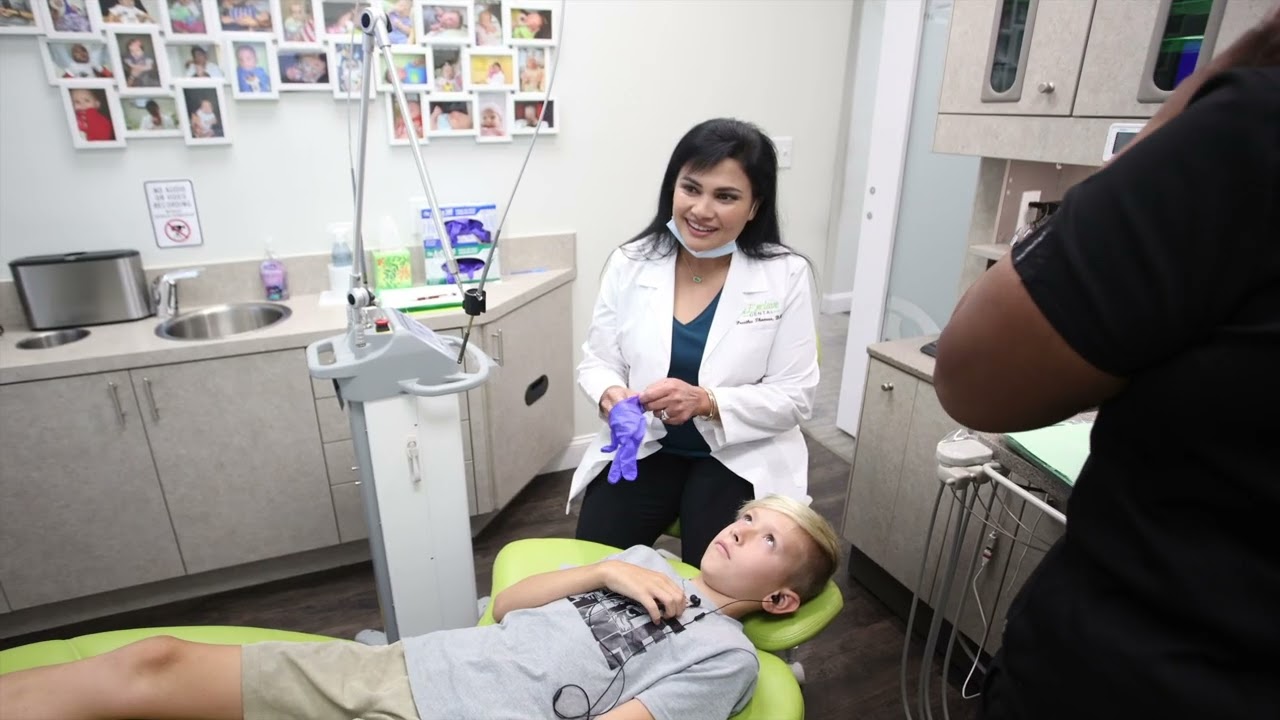
At Enclave Dental in Southlake, Dr. Thomas and our team understand that both parents and their children can feel nervous about walking into a dental office, especially when the purpose of the visit is to undergo surgery! That is why we put extra effort into creating a calm and peaceful environment where even infants feel at ease. Throughout the 10+ years that our practice has been in existence, we have treated thousands of babies, and we have a sterling reputation in the community as one of the best places for lip and tongue tie treatment.
What Problems Can Be Solved by Lip and Tongue Tie Treatment?
Often, mothers who bring their babies to us are in pain due to the breastfeeding problems that come with a lip or tongue tie. Their babies may not be properly gaining weight and could be fussy and failing to thrive. Older kids may experience ongoing dental problems, speech challenges, and other issues. A frenectomy, along with other potential treatments (like myofunctional therapy or orthodontia) can stop these problems from progressing and prevent future complications. Indeed, treatment leads to happier households and healthier children.
Are There Any Age Restrictions on Lip and Tongue Tie Treatment?

It is best to treat these conditions during infancy, but really, lip and tongue tie can be successfully treated at any age. In our office, we do not treat kids between the ages of 1 and 3 simply because the procedure can be emotionally traumatic. Older kids (4 and above) find it easier to understand what is happening and comply with treatment instructions. Other factors besides age, such as the tongue’s strength and the amount of room in the mouth, also determine whether an older child is a good candidate for a frenectomy.
How Do Different Age Groups Benefit from Lip and Tongue Tie Treatment?

Lip and tongue ties are usually treated in infancy. After a frenectomy, feeding generally becomes much easier for both mothers and their babies. This supports proper growth, better weight gain, higher-quality sleep, and a more comfortable bonding experience during breastfeeding. For older kids, releasing a lip or tongue tie can improve speech and reduce the risk of future dental problems. (Often, older kids need myofunctional therapy to learn how to properly use their oral structures in order to enjoy the greatest possible benefits from their frenectomy.)
Frenectomy Aftercare for Your Baby
Many parents are somewhat nervous about the recovery period after their baby’s frenectomy. There is no need to worry! You may be surprised by how easy the process is. Dr. Thomas and our team will walk you through the steps you need to take to facilitate your child’s healing process and lead to a successful treatment option. Continue reading below to get more information about frenectomy aftercare.
What to Expect During the Recovery Process

Because Dr. Thomas uses a soft tissue laser, bleeding is typically minimal, and many babies are able to feed soon after the procedure. Even so, healing is a process. It is common for babies to be fussy, sleepy, or temporarily less coordinated with latching during the first few days. Mild swelling, tenderness, and a white or yellowish healing patch at the release site can also be normal as the tissue repairs itself.
Most babies begin to feel more comfortable within several days, while full healing and improved function may continue to develop over the next few weeks. Some parents notice feeding changes right away, while others see gradual progress as their baby learns how to use their tongue or lips with greater freedom.
If your baby refuses to feed, has heavy bleeding, or develops a concerning fever or other signs of infection, please contact our team right away. Post-op complications and severe side effects are rare, but it is still important to monitor your child and take swift action to address any problems.
Making Your Baby Comfortable

In some cases, it can be appropriate to provide very small doses of pain medication to a baby who has had a frenectomy. Ask Dr. Thomas for dosage/medication recommendations. Often, no medication is necessary. Lots of cuddling, warm baths, or the application of a cold, damp washcloth may be enough to soothe any discomfort as your baby heals.
Breastfeeding Tips

After a tongue-tie or lip-tie release, breastfeeding can feel different for both baby and parent. Offer the breast often, follow your baby’s cues, and allow extra time for practice. Skin-to-skin contact, a quiet environment, and gentle rocking can help your baby relax before latching. Some babies need to relearn their suck pattern, so early feeds may be inconsistent even when the procedure was successful.
Try to get as much of the areola in the baby’s mouth as possible. If you sense a good latch, gently compress the breast to encourage milk flow.
If breastfeeding remains challenging after a bit of time and practice, it may be wise to seek help from a lactation consultant.
The Importance of Stretches

Stretches are one of the most important parts of frenectomy aftercare. Babies heal quickly, and without gentle movement, the released tissue can tighten or reattach. Our team will show you exactly how and when to perform the stretches so you can feel confident at home.
Always wash your hands first, use gentle but purposeful pressure, and try to keep the experience brief and calm. Generally, all you have to do is use mild to moderate force to extend the lip or tongue and encourage full range of motion. Gentle massage around the procedure area is also helpful. We generally recommend doing stretches every 2 – 3 hours for the first week of recovery. After your baby’s first post-op check-in, we will evaluate their healing and advise you on the next steps.
Request a Consultation Today!
Dr. Thomas is a local expert in frenectomies. She has performed close to 1000 in the area -- and you can feel confident trusting her with your baby’s, too. Contact our office to discuss frenectomy today or complete the form below to have a member of our team follow-up with more information.